
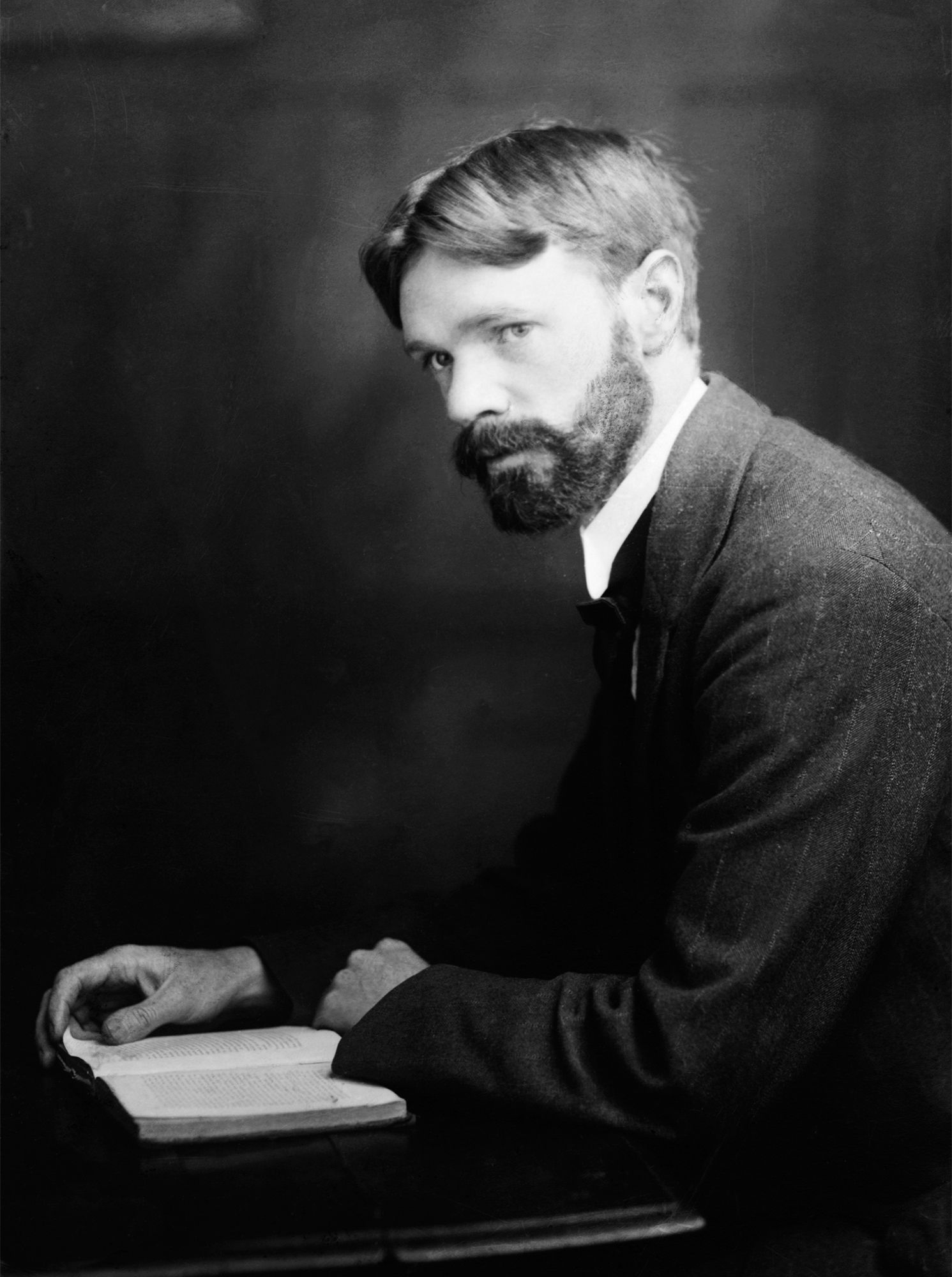
D.H. Lawrence, a seminal figure in modern literature, championed the novel as a living, organic entity. He asserted that in true art, every element—setting, theme, character—is interdependent, forming a cohesive whole that transcends mere didacticism. While acknowledging that authors might weave philosophical or ideological threads into their narratives, Lawrence contended that such elements should not overshadow the novel’s intrinsic vitality. For him, the essence of a novel lies not in propagating the author’s personal beliefs but in authentically portraying the complexity of human experience.
In contrast, the Philosurreal Postmodern Mystic perspective offers a nuanced view of artistic creation. This approach aligns with Lawrence in viewing novels as pure artistic expressions that should emerge organically, mirroring the fluidity and unpredictability of human life. However, it diverges in its understanding of the creative process. From this standpoint, an artist crafts characters by drawing from sensory experiences and infusing them with imaginative insights. The space between observation and creation is filled with the subconscious’s hues, suggesting that philosophical elements naturally permeate the narrative in a sublime, artistic manner.
Where Philosurreal Postmodern Mystic align—
Novels are pure artistic creation and should emerge from within.
Novel mirrors the fluidity and the unpredictability of human experiences.
Where Postmodern Mystic disagrees with D. H. Lawrence
An artist creates a character—picking from his sensory world, and weaves an art around it by embedding his imaginative bits. There is a space between observation and creation. Artist fills this gap by toning it with his subconscious colors. Subconscious mind is the hub of sublim experiences. Ideas come from experiences. So philosophical patches could not be denied, they would insert in sublime form, in an artistic form.
Key Difference Between the subconscious world
• D. H. Lawrence’s subconscious = A wellspring of raw, unfiltered life, deeply rooted in instinct, sexuality, and primal emotions.
• Philosurreal Postmodern Mysticism’s subconscious = A space of illusion, dissolution, and paradox, where reality is fluid, unstable, and open-ended.
How ideas enter a novel—
For D. H. Lawrence, ideas emerge through instinct and feeling, while for postmodern mysticism, they emerge through the interplay of perception, illusion, and the subconscious dissolving itself.
The subconscious is not just a storehouse of instinct but a gateway to dissolving the self.
• It is where ideas, sensations, and dreams intermingle—not just as raw emotion, but as an intricate play of meaning and illusion.
• Instead of revealing “the truth of life” (as Lawrence suggests), the subconscious in postmodern mysticism reveals the uncertainty of reality itself.
Wholeness : D. H. Lawrence vs. Philosurreal Postmodern Mysticism
Lawrence: The Whole is Greater than Its Parts
D.H. Lawrence believed that the whole of human existence—“man-alive”—is greater than any of its individual components. He rejected the idea that a person could be reduced to soul, body, mind, or consciousness in isolation. Instead, he saw true life as a vital, indivisible force, one that transcends its fragmented aspects.
For Lawrence, the cohesion of these elements creates a force larger than their sum—a fully realized, instinctual being. This is why he privileged organic unity in both life and art: a novel should not be a collection of philosophical ideas but a living, breathing whole that mirrors the completeness of human experience.
Philosurreal Postmodern Mysticism: Wholeness Resides in Fragments
Philosurreal Postmodern mysticism, however, sees wholeness not as something greater than its parts but as something that emerges from their interplay. The whole cannot exist without its fragments; it is not a singular force that overcomes them but a shifting, dynamic relationship between them.
• Body, mind, and spirit do not fuse into a higher state—instead, their tension, gaps, and overlaps create meaning.
• Identity is not fixed but fluid, shaped by the interplay of experiences, memories, and illusions.
• Art is not about presenting a unified truth but about allowing fragments to resonate, leaving space for interpretation.
In this view, fragmentation is not a flaw but a pathway to depth. A novel, instead of being an indivisible whole, is a field of shifting parts—where meaning arises not from a fixed center but from the space between fragments.
Contrasting Artistic Visions
• Lawrence’s novel seeks to capture the raw force of life, ensuring that all parts fuse into a cohesive whole.
• Philosurreal Postmodern mystic literature does not attempt to fuse everything but instead embraces the fractures, showing that meaning is found within the gaps themselves.



 Pragya’s Pen
Leave a reply to In the Mind’s Theatre, Plot Dissolves” – Literary Author Cancel reply