
I believe—‘Feeling, not intellect, is the true root of morality’—I am writing this essay from this point of view.
In the literary world, morality is often mistaken for explicit preaching. Yet, true morality lies not in words but in how a life is lived, how a heart feels, and how those feelings shape the art one leaves behind. But it could n’t be denied that morality is a subjective matter, so this essay couldn’t be justifiable for all. It is my personal view, how I felt while going through both artists’ works. In this light, the contrast between Guy de Maupassant and Leo Tolstoy becomes sharp, illuminating deeper truths about art, feeling, and human responsibility.
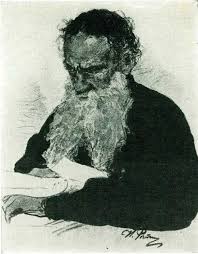
Turgenev was a part of the literary circle in which Gustave Flaubert, Maupassant, Zola were members. Out of that touch Turgenev gave the young writer Maupassant’s story book collections to Tolstoy, advocating him a rising comet. That time Tolstoy was leading the later half part of his life, and art was a futile thing in his writing. So his judgment was more prone to be false and biased—and also ironical. Tolstoy accused Maupassant of lacking a moral relation to his art.
While I gave a closer reading of Maupassant’s stories, such as ‘Two Friends,’ it reveals a profound moral undercurrent. Through dark humor and stark realism, Maupassant portrays the cruelty of war, not through abstract speeches, but through the lived terror and dignity of two ordinary men. The intense feeling wrapped in the simplicity of the narrative—freezing the background into —shows that morality does not need to be announced to exist. Feeling is the true source of morality. As in mysticism, where love and feeling become the only true pathways to the divine, in art too, feeling defines moral depth far more authentically than intellectual pronouncements.
Maupassant’s deep emotional landscape was shaped early in life. Witnessing the brutal mistreatment of his mother by his father, he developed a sacred image of womanhood—wounded, dignified, betrayed. His father’s cruelty and extramarital affairs left scars that shaped both his relationships and his literature. He developed a conflicted view about women, sometimes ambivalent. His mother spread soft and sacred feelings in him, while his father’s mistresses—the agony his mother endured—made Maupassant dark. Far from being a misogynist, Maupassant’s writings, such as ‘Boule de Suif,’ show a nuanced, empathetic view of women. In a society that readily exploited and judged them, Maupassant captured their vulnerability, strength, and tragic dignity with remarkable tenderness.
Despite leading a life often shadowed by illness and brothel visits—a common norm in his time—Maupassant never abandoned the emotional center of his being. He remained loyal to his mother, supporting her throughout her life. His art emerged from lived feeling, often masked in irony but rooted in human truth. Unlike many so-called moralists, he lived without moral hypocrisy.
Tolstoy, for all his philosophical writings on love, faith, and family, could not live the moral ideal he preached. In the most crucial sphere—the home—he failed. Abandoning his wife and children toward the end of his life, he left behind not a spiritual example, but a trail of heartbreak. The contrast is sharp: Maupassant, often accused of cynicism, lived his emotional truths quietly; Tolstoy, who called for universal brotherhood, could not uphold the simplest brotherhood of marriage and fatherhood. He shared the hypocritical viewpoint of Mohan Das Gandhi, and even exchanged letters with him.
Tolstoy’s greatness — the reason he became immortal — comes from the period when he was still deeply an artist, not when he became a moralist or a preacher. His earlier works — War and Peace, Anna Karenina, The Death of Ivan Ilyich — are filled with a richness of human experience, contradictions, feeling, tenderness, and deep psychological insight.
But in his later years, especially after his so-called “spiritual crisis,” Tolstoy grew disillusioned with art itself. He began to see art primarily as a tool for moral instruction — shrinking art into a kind of sermon — which hurt the soulfulness that had made his early works great.
When he judged Maupassant harshly, he was speaking more from the position of a moralistic preacher, not from the Tolstoy who had once created living, breathing, suffering characters.
Art deserts no one, but some desert art. Tolstoy became eternal through the artist he once was—not through the prophet he later became.
Here a broader spiritual perspective sharpens the comparison. Lord Buddha, too, left his family. But Buddha’s departure was different: it was not abandonment born of internal dissonance, but renunciation born of compassion. He did not leave to escape responsibility but to embrace a larger, universal responsibility. Tolstoy’s departure, however, was not a transcendence of human bonds but a collapse under them. “Buddha attained salvation, while Tolstoy died helpless and despondent, in a railway station’s waiting room.”
Thus, it is clear:
True morality is not shouted from pulpits; it is lived in quiet constancy.
It springs from heart and feeling, not from egoistic intellect or abstract philosophy.
Maupassant, in his wounded sensitivity and human consistency, stands closer to authentic morality than the intellectualized Tolstoy ever could.
“The greatest thing in the world is not so much where you stand as in what direction you are moving.” – Guy de Maupassant
*****
Pahalgam: The Heaven that Bled
This is not a memory. It is a longing—for a place I have never seen, yet always imagined: Pahalgam, the heaven of Kashmir.
The hellish incident came like a blow. We had become accustomed to hearing stories of terrorism, but after the revocation of Kashmir’s special status and the lifting of Section 370, there was a hope—fragile but real—that things were improving.
Amid this, the Pahalgam attack struck without mercy: twenty-six tourists killed in broad daylight. There is no need to whisper the bitter truth—every terrorist was Muslim, every victim Hindu. Since then, soul-shattering images and funeral processions have flooded the media.
The Prime Minister’s response has been firm. Suspending the Sindhu water agreement is a bold step. Yes, civilians, women, and children will suffer. Yet how can we separate the people from the authorities they empower, whether by silence or by will?
In Gaza, too, civilians recently marched against Hamas — but how much blood had to be spilled before they spoke? If only they had risen sooner, perhaps the rivers of Gaza would have run thinner with blood.
******In Light Vein: Musk Mania
Spilling filth on the Earth — is it wise to march towards Mars? Dirt here, dream there.


 Pragya’s Pen
Leave a comment