
“All modern American literature comes from one book by Mark Twain called Huckleberry Finn.”
—Hemingway
Before Mark Twain, American fiction writing was a pupil of European, particularly British for a tone. What was the European Formal Tone? It referred to stylistic, thematic and narrative conventions. A certain type of elevated, elegant literary grace, enwrapped the writer’s nib. Jane Austen’s novels are its example, and it appeared that whenever Yao used a rustic, vulgar word, the words would stumble away. They couldn’t bear the rugged touch.
Polished language over realism
Moral instructions and clarity
Aristocratic and educated plots, stories swirled around the upper and middle class.
Structured, linear plot-lines.
Mark Twain’s greatness lies in his newer venture, where he shattered the above contemporary literary code. His voice is totally new and intentional. What did he do?
He wrote in American dialects, full of slang and errors, but full of life.
He gave us poor boys, con men, escaped slaves, not polished aristocrats.
His plots drifted like rivers, full of moral ambiguity and unresolved tensions.
He chose satire over sermon, feeling over formality.
These things changed the arena of American literature, and foreign’s effect got diminished.
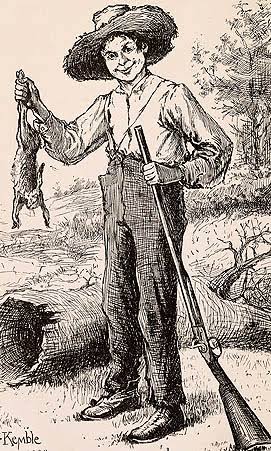
While Hemingway proclaimed that all American Literatures come from one book by Mark Twain called Huckleberry Finn. He wanted to talk about the shattered formal tones, which were replaced by Twain’s new ventures. Hemingway didn’t tag The Adventures of Tom Sawyer, and gave the courtesy to Huck Finn’s Adventures though Tom Sawyer was published in 1876, eight years before Huck Finn. I think the main reason lies in the thematic depth of Huck Finn—it is narrated in first person voice, while Tom Sawyer is a third person narration. Did the first person, bring the American literature more nearer. Tom Sawyer focuses more on the adventures and mischiefs of youth, offering a lighter narrative centered around childhood escapades, while Huckleberry Finn delves into profound themes such as race, freedom, and moral dilemmas, presenting a candid portrayal of pre-Civil War American society. Hemingway and others viewed it as a significant departure from previous literature, addressing societal issues with unprecedented realism.
This could be a reason—behind Hemmingway’s preference, and he succeeded in creating an immortal sentence brimming with literary myth. But it underscored the genre of a book. This statement casts a long shadow, so much that it overshadows the emotional weight. It is a type of literary mythology, which undermines the raw emotions shuttling like a chirpy bird. A child reading Twain’s Adventures book hardly delves into thematic depth. He loves the frisks, and delves into Tom’s and Finn’s light whims. I read it in my school days, my classmates also, we rarely talked about the deep pain which was underlying beneath the surface. We surfed and frisked on the waves, in later years I noticed the raw truth and silenced voice, which were buried beneath. The Adventures of Huckleberry Finn is on surface whims in pranks, frisks and adventures. Basically it was a children’s classic. Its theme was on slavery, Huck wanted to free Jim from Slavery. A child, especially a foreigner wading through it has chances to escape the moral and social dilemma in the wings of joy. Through these adventures, Huck gradually questions the values he’s been taught and develops his own sense of right and wrong, ultimately choosing to help Jim, even if it means defying the law and social norms.
Hemmingway’s statement is powerful—but also narrowing. It turns one book into a myth of origin, leaving little room for other voices, other beginnings, especially a child reader’s viewpoint.
As a reader from another land, Huckleberry Finn felt more like a frisky children’s classic than a literary genesis. The vernacular language often hindered the flow, and the deeper themes seemed tucked away like a shuttlecock tossed between light strokes. In my opinion, Huck Finn’s greatness lies in its dual incarnation, which resonates throughout the book—a child’s bliss, and deep deformity and pain of contemporary society. Twain has interwoven both succeedly in such a way that both remain tucked, keeping their presence untouched with each other. It is a light book for a child, while a heavy book for an adult reader.
I’ve found Twain’s brilliance elsewhere also—in his travelogues, in his autobiography, in his sharp, lucid humor. His writing has contrast, wit, and clarity. He is a great writer, perhaps, but not the eruptive myth Hemingway made him out to be. Hemingway had underscored a child’s viewpoint.
Sometimes, the literary myth overshadows the literature itself. Ask a child reader— he would explain it more accurately in his blissed silence.
—-Pragya

 Pragya’s Pen
Leave a comment